
We know that changes in skin support and firmness are a natural part of life. We also understand that some people may wish to discuss options that address the appearance of these changes.
Our clinic can provide consultations about PDO mono threads. During consultation, a practitioner will assess your concerns, review your medical history and discuss cosmetic options that may be appropriate for you.
PDO mono threads are smooth, absorbable sutures placed beneath the skin by trained practitioners in a clinical setting.
Any change in appearance, and how noticeable it is, varies between individuals and cannot be guaranteed.
PDO Mono Threads
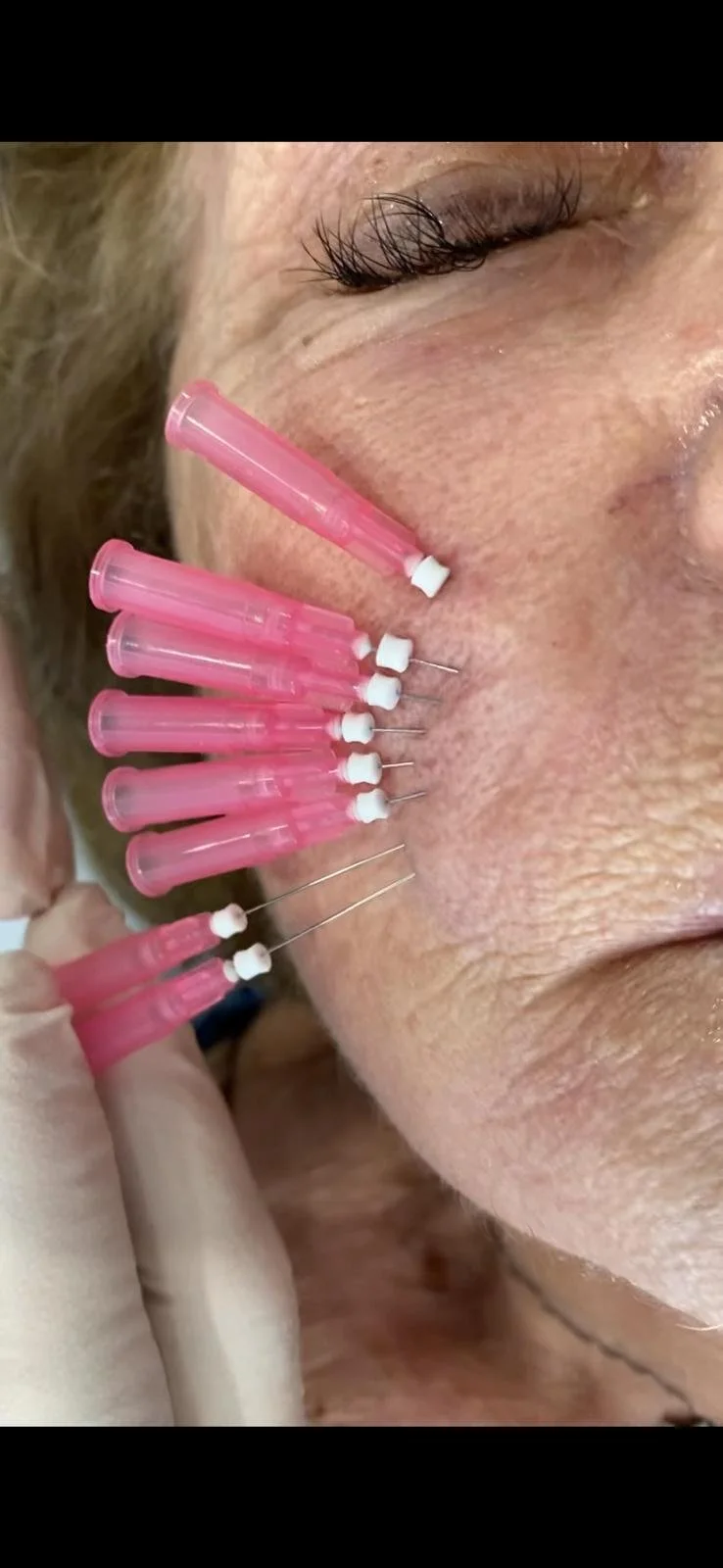
What may be discussed in consultation
For suitable individuals, consultation may address concerns relating to:
the appearance of skin support in selected facial or neck areas
the appearance of skin firmness
the appearance of surface texture in areas such as the cheeks, jawline or neck
These concerns are assessed during consultation to determine whether any cosmetic procedures may be appropriate.
How treatment planning works
During treatment, fine PDO threads are introduced into targeted areas just beneath the skin:
Threads can act as a temporary scaffold in the tissue.
As the material gradually dissolves, the process is intended to stimulate local collagen-related activity along the thread pathway.
The number of threads, placement pattern and treatment areas are planned individually after medical assessment. Your practitioner will explain how the treatment is proposed to work in your situation, its limitations, and alternative options (including not having treatment).
Safety, Risks and Aftercare
All cosmetic procedures carry risks and may not be suitable for everyone.
Before any procedure is performed, your practitioner will:
review your medical history, medications and relevant health information
examine the treatment area
explain the proposed procedure, limitations and alternatives, including choosing not to proceed
discuss possible risks and side effects, including less common but more serious complications
Risks associated with procedures may include:
redness or swelling
dryness or peeling
skin sensitivity or irritation
pigmentation changes
infection or delayed healing
temporary muscle weakness
uneven or unexpected aesthetic outcomes
Pain and comfort levels vary between individuals and depend on the procedure used. Some procedures may cause sensations such as warmth, tingling, tightness, discomfort or pressure during or after treatment.
Written aftercare instructions will be provided if treatment is performed.
Frequently Asked Questions
We’re all about transparency and want to provide you with the information you need to make informed decisions about your aesthetic journey. If you have any additional questions or concerns, please reach out – our knowledgeable team is here to assist you every step of the way.
-
They are smooth, absorbable sutures placed just beneath the skin by a trained clinician, used with the intention of addressing the visible appearance of local support and texture in suitable individuals.
-
Common treatment areas include the cheeks, jawline, neck and sometimes the temple region. Your practitioner will assess your anatomy and concerns to determine which areas, if any, are appropriate for you.
-
The timing and degree of visible change differ between individuals and cannot be promised in advance.
-
Any perceived improvement and how long it may last depend on factors such as your skin, age, lifestyle, number and placement of threads and how your body responds. Your practitioner may discuss review or maintenance, but no fixed duration can be guaranteed.
-
Downtime varies. Your practitioner will advise what is likely for your plan and any short-term activity restrictions.
-
In some cases, PDO mono threads may form part of a broader plan with other treatments (for example, energy-based procedures), if this is considered clinically appropriate. Any combinations are timed and sequenced on a case-by-case basis to support safety and healing; in some situations, combination treatment may not be recommended.
-
Suitability is assessed individually. Treatment is generally not recommended in situations such as pregnancy or breastfeeding, active infection or inflammation in the area, certain medical conditions or medications, or where skin quality or anatomy make threads unsuitable. Your practitioner will determine whether this treatment is appropriate for you and may recommend no treatment or referral instead.
-
Threads and devices used in the clinic are selected and used by appropriately qualified clinicians in line with current regulatory requirements and clinic protocols. Your practitioner can explain which product is being proposed for you, its classification and how it is intended to be used in your treatment.