
Q-Switch Tattoo Removal
Now Available at Ageless Clinics
Q-Switch laser treatment for unwanted tattoo pigment and selected pigmentation concerns, beginning with an individual consultation with Dr Maryam.
Some people want to reduce the appearance of unwanted tattoo pigment or selected pigmentation concerns. At Ageless Clinics, this begins with a consultation with Dr Maryam.
Dr Maryam assesses your skin, reviews your medical history, and discusses whether Q-Switch laser or another approach may be appropriate for your individual circumstances.
How pigment or tattoo ink responds depends on factors including colour, depth, skin characteristics and treatment history. Any change in appearance varies between individuals and cannot be guaranteed.
What Q-Switch may help with
Suitability is assessed individually. These are concerns your practitioner may discuss at consultation.
Unwanted tattoo pigment: Professional, amateur or cosmetic tattoo ink, assessed by colour, depth and density.
Selected pigmentation: Sun-related or age-related pigmentation, assessed for suitability before treatment.
Uneven-looking pigmentation: Localised areas of darker pigment, reviewed on a case-by-case basis.
Previous treatment history: Prior tattoo removal or pigmentation treatment, factored into your plan.
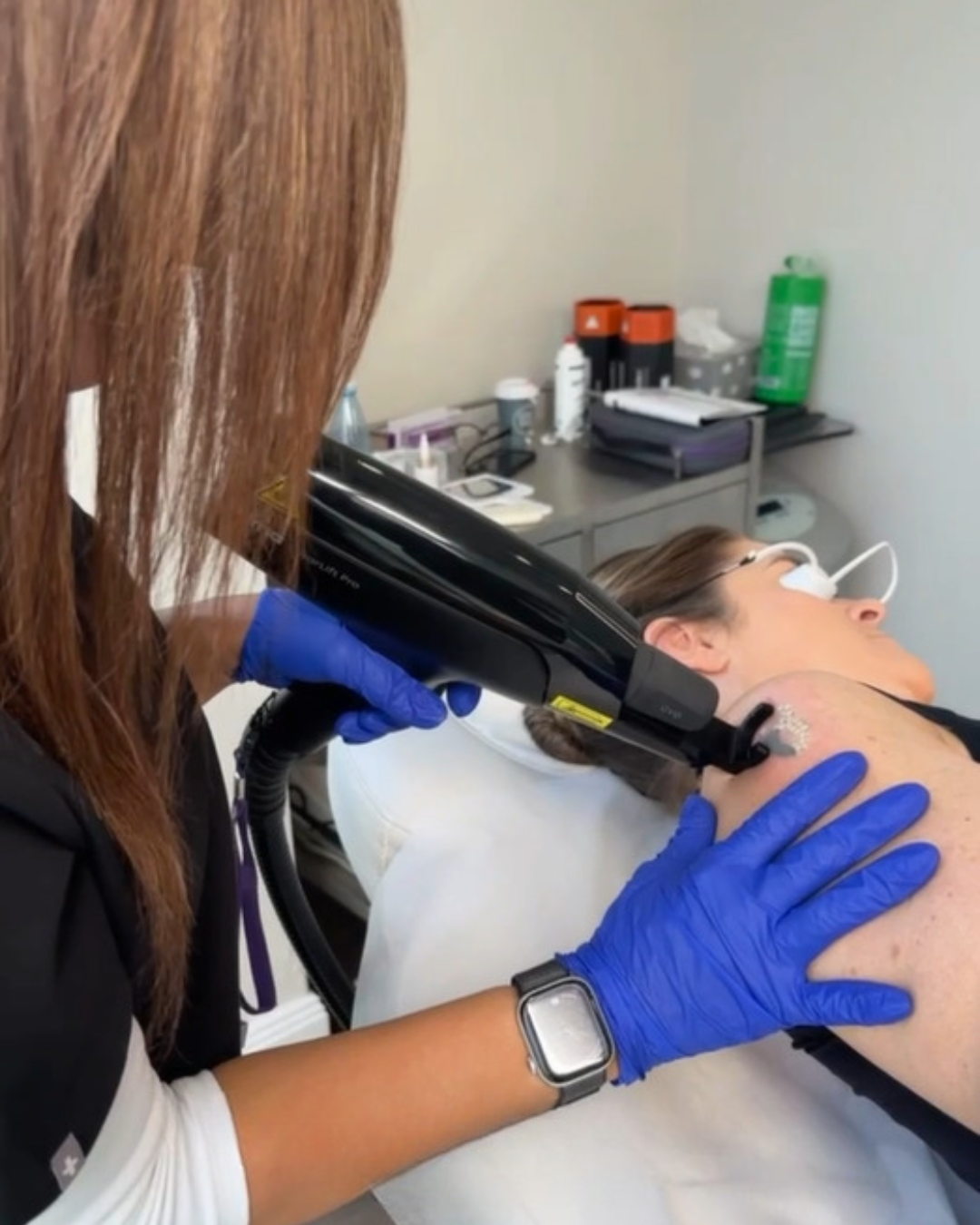
Ultra-short pulses, gradual clearance.
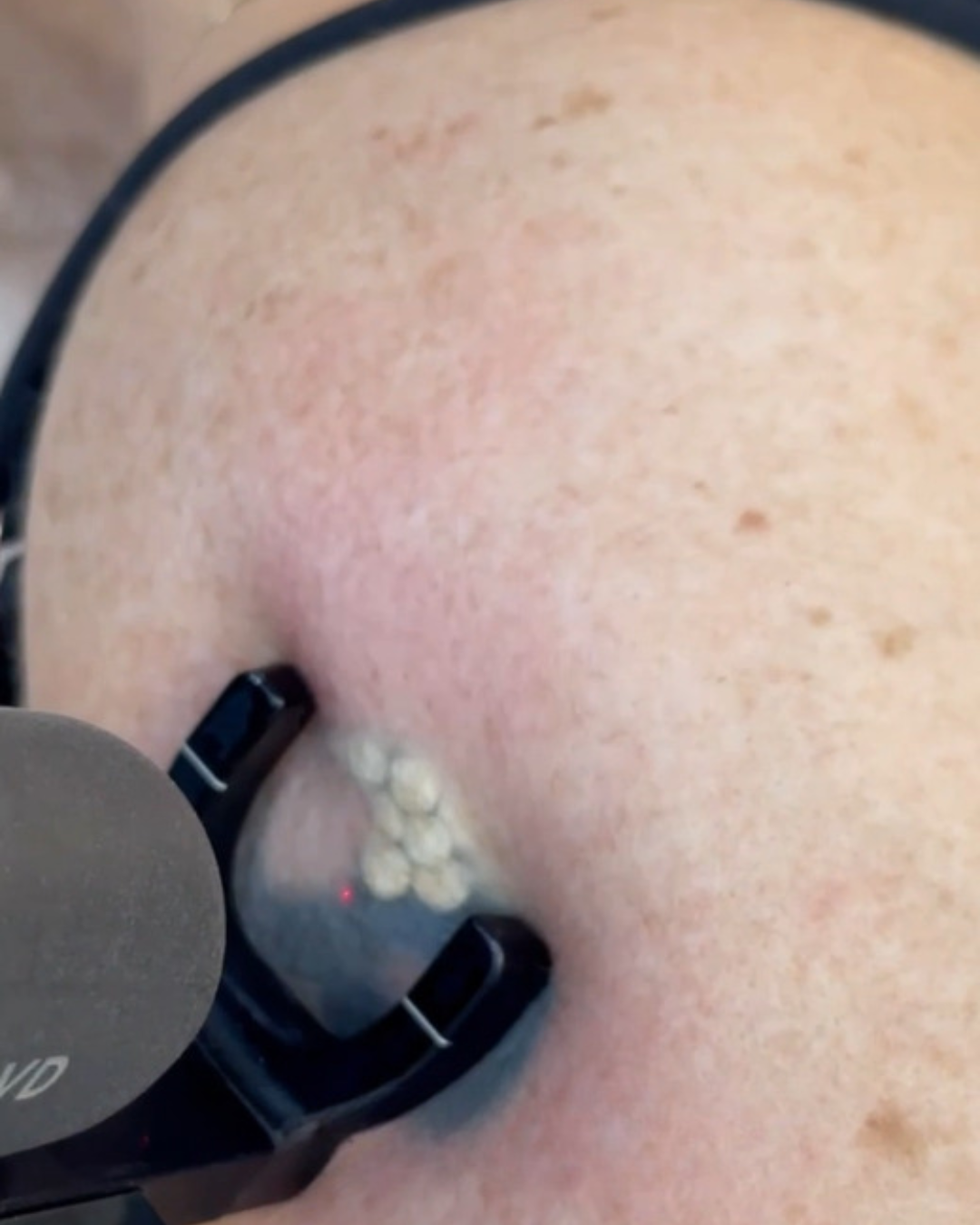
Q-Switch laser delivers energy in extremely short, high-intensity pulses. This energy fragments pigment particles beneath the skin into smaller pieces.
Over the following weeks, your body's own clearance processes gradually remove the fragmented pigment. This is why tattoo removal and pigmentation treatment typically requires multiple sessions rather than one.
Not all pigment responds the same way. Some tattoo colours and cosmetic tattoo pigments may be less predictable, may need more sessions, or may not be suitable for treatment. Your practitioner will assess this at consultation.
What consultation covers
Review of your medical history, medications and relevant health information
Assessment of your skin type and skin characteristics
Examination of the tattoo pigment or pigmentation concern, including colour, depth, density and location
Discussion of your concerns, expectations and the proposed procedure
Explanation of limitations, alternative options, and possible risks and side effects
Advice on whether a test spot may be appropriate before treatment begins
LAUNCH OFFER
10% off Q-Switch tattoo removal & pigmentation
Consultation required. Suitability assessed individually. Individual results vary and cannot be guaranteed.
Safety, risks and what to expect
All cosmetic procedures carry risks and may not be suitable for everyone. Dr Maryam explains your full risk profile before any treatment is performed.
Redness, swelling or tenderness
Blistering, crusting or scabbing
Skin sensitivity or irritation
Burns
Infection or delayed healing
Temporary or permanent pigmentation change
Scarring
Incomplete fading of tattoo pigment
Darkening or colour change of some tattoo pigments
Eye injury if appropriate protection is not used
Also assessed at consultation
Darker skin types, where pigmentation change risk is higher
Selected ink colours or cosmetic tattoo pigments
Pigmentation that may be heat-sensitive or medically complex
Whether expectations about pigment clearance are realistic
Whether referral or medical review is needed before proceeding
May not be suitable if you have
Pregnancy or breastfeeding
Recent sun exposure, tanning, fake tan or melanotan use
Active infection, irritation or broken skin in the area
A history of keloid or hypertrophic scarring
Certain medications, supplements or medical conditions
Frequently Asked Questions
-
Complete removal cannot be guaranteed. Some pigment may fade, while some may remain. Response depends on the tattoo, your skin and your individual healing. -
This varies by pigment colour, depth, density, location, skin type and individual response. Your practitioner discusses this at consultation, sessions are typically spaced weeks apart to allow your body to clear treated pigment.
-
No. Not all pigmentation is suitable for light-based or laser treatment. Some may worsen with heat or inappropriate treatment selection, which is why assessment comes first.
-
Some may be considered after assessment, but cosmetic tattoo pigments can be unpredictable and may darken or change colour after treatment.
-
The treated area may be red, swollen, tender or blistered. Healing typically takes 1 to 2 weeks between sessions, and varies by area and individual response.
-
No. A consultation is required before any procedure. Treatment proceeds only if your practitioner considers it appropriate for your circumstances.